

Dr. Risch Laboratory: Career in a well-developed Garden of Eden
Dr. Risch Laboratory: Career in a well-developed Garden of Eden
Body fluids and the most famous virus in the world
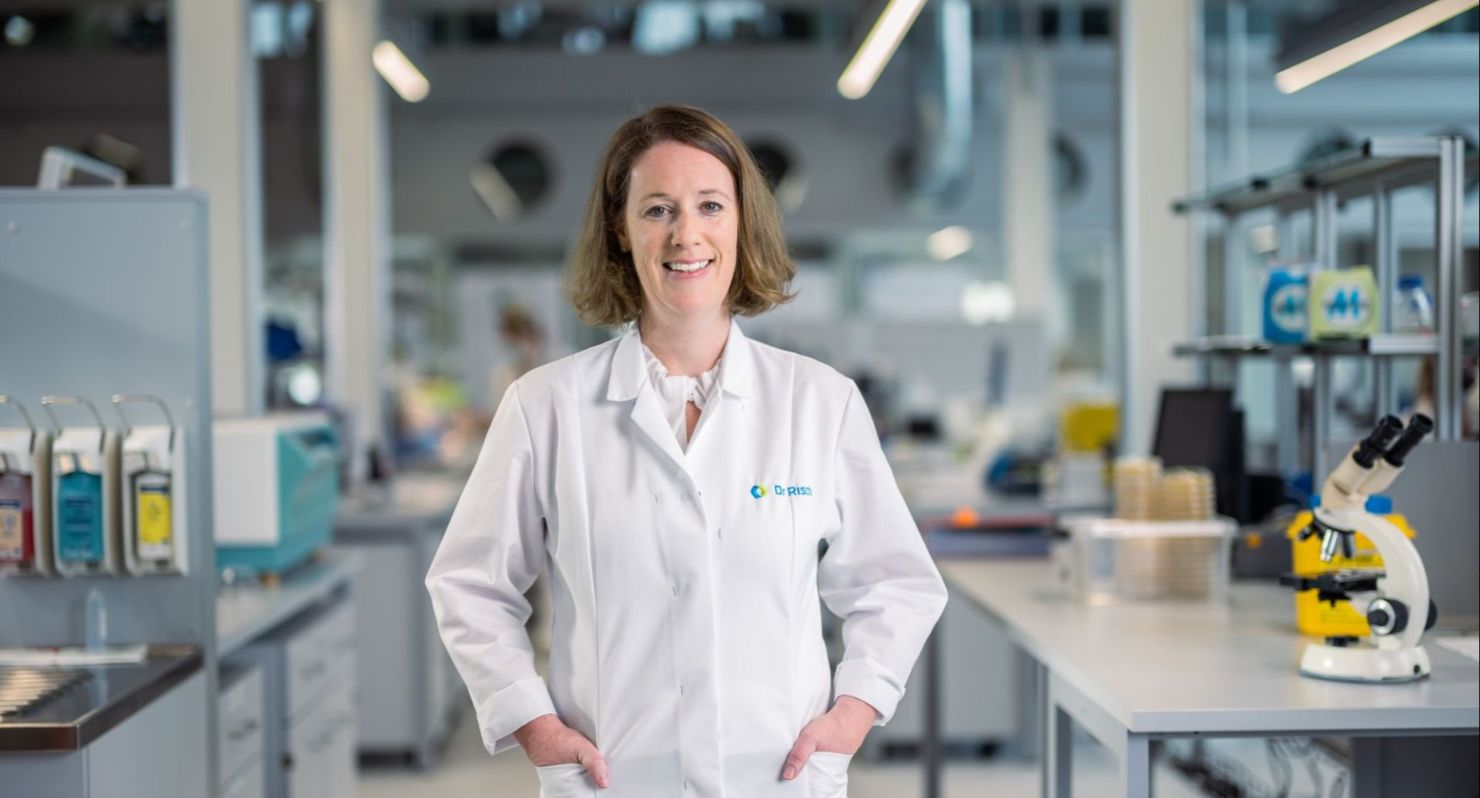
Dr. Nadia Wohlwend stands at the office door marked 2065. Her desk is covered with documents. They look important. The lines are crisscrossed with neon-colored marks, and everything is neatly arranged in small stacks and colorful plastic folders. Through the window next to Nadia's desk, you can see an old factory building. With a lot of rustic charm, it is falling apart. In the corridors between glowing and buzzing diagnostic machines, people in lab coats bury their eyes in the eyepieces of microscopes. We are in Nadia's realm. She is the head of the microbiology department at Dr. Risch's laboratory.

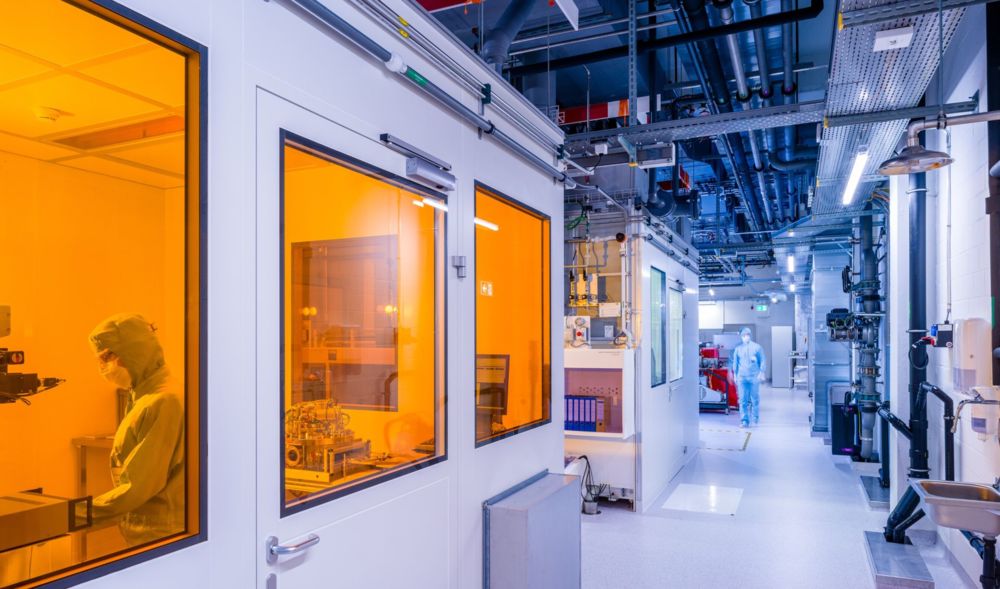
We walk through the laboratory rooms. From the outside, the building in the Buchs industrial area looks rather inconspicuous. But once you have passed through the numerous glass doors, you find yourself in a state-of-the-art laboratory like something you would only expect to see in films. The Dr. Risch laboratory, a family business run by doctors, is an authority in the region. It is considered a leading partner in laboratory medical diagnostics and has developed over the last 50 years into an impressive company with over 20 locations in Switzerland and Liechtenstein.
On the microbiology tables are numerous Petri dishes containing cultured pathogens, bacteria, and fungi. Their rich variety of colors and shapes is grotesquely beautiful. Masked lab technicians carefully spread the liquid from test tubes onto colorful culture media. Moisture, warmth, and time allow fungi and other strange structures to grow. In the middle of this sterile landscape of high-tech equipment and human sample material, Nadia stands and discusses the day with her colleagues. Nadia's department examines a wide variety of sample material sent to the laboratory in Buchs by general practitioners in Switzerland and Liechtenstein. From time to time, individual prostheses arrive in plastic containers, which the laboratory examines for infections. In short, all kinds of body parts and fluids find their way into Nadia's department. Among other things, Nadia is responsible for ensuring that medical professionals receive medical findings. In her day-to-day work, she is also always available to answer questions from her colleagues.
Played a key role in setting up the coronavirus laboratory "Covilab Dr. Risch"
At least until 2020, a day in Nadia's job could have looked like this. But then a pandemic brought the world as we know it to a standstill. The culprit is still on everyone's lips today: COVID-19. While shops had to close and people were forced to work from home, the Dr. Risch laboratory became a key player in the fight to combat and contain the pandemic overnight.
Nadia was also particularly challenged during this time. Suddenly, testing capacities had to be ramped up and new technologies implemented. Without further ado, a separate coronavirus department was opened, focusing solely on evaluating COVID-19 tests. At the time, Nadia headed up the so-called Covilab Dr. Risch, in addition to her role as head of the preanalytics department and deputy head of microbiology.

Back to her roots: her home region of Werdenberg
When no one was thinking about an impending pandemic and the world was still running smoothly, Nadia was working on the qualities that would earn her this responsible position. After completing her master's degree in molecular life sciences with a specialization in microbiology and immunology at the University of Bern, the now 40-year-old worked at the University Hospital of Basel and the Institute for Infectious Diseases at the University of Bern as part of her FAMH training.
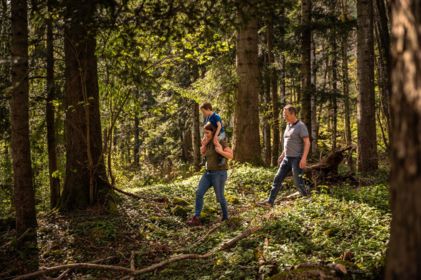
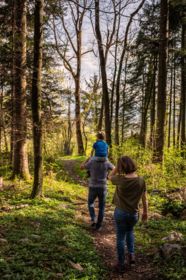
When her son Tim was born in 2016, however, she moved back to Sennwald. Far away from the highway, the village with just under 5,000 inhabitants lies between wooded hills and the Alpstein mountains. For stressed commuters, it is an almost forgotten idyll in the St. Gallen Rhine Valley. Nadia, her husband Christian, and their son Tim live in a detached house with a terrace and garden—right next to a small stream. It's not uncommon for a soccer ball to end up in the rushing water, kicked past Tim's feet by an inaccurate pass. On clear summer evenings, the small family looks out from their garden across the green Rhine Valley to the rocky mountains of Graubünden. Just a few minutes' walk from their home, the three have set up their own fire pit. Where the Old Rhine becomes the Steinbach, Tim hones his stone skipping skills while Nadia and Christian enjoy the peaceful moments by the crackling fire.

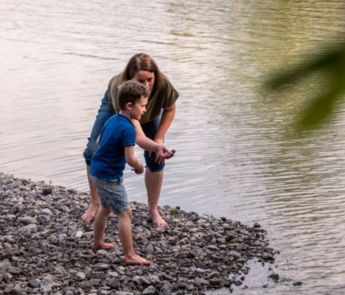
This closeness to nature is important to Nadia. Her job demands a lot from her, and especially during the coronavirus pandemic, when most people were working from home and able to spend more time with their families, Nadia's days in the lab were long. Operations had to be maintained 24 hours a day, seven days a week, which meant Nadia had to work the occasional night shift. That's why, according to Nadia, it's important to make the most of the few cozy moments you have, and it helps when you don't have to travel far to be in nature. Nadia has found her new home in Sennwald. Since moving there, she and her family have made friends, and her relatives live just around the corner.

The Sarganserland-Werdenberg region and its attractions
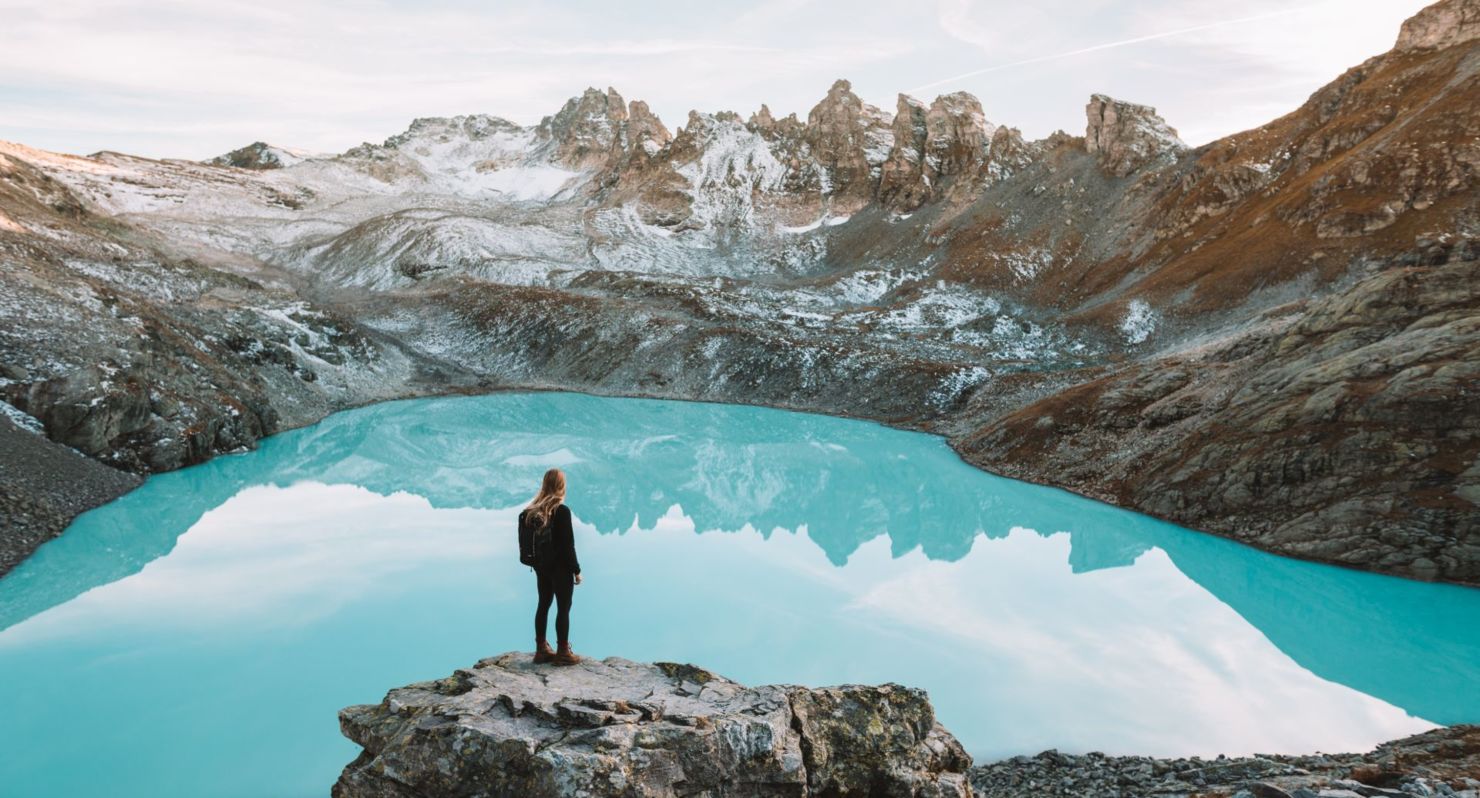
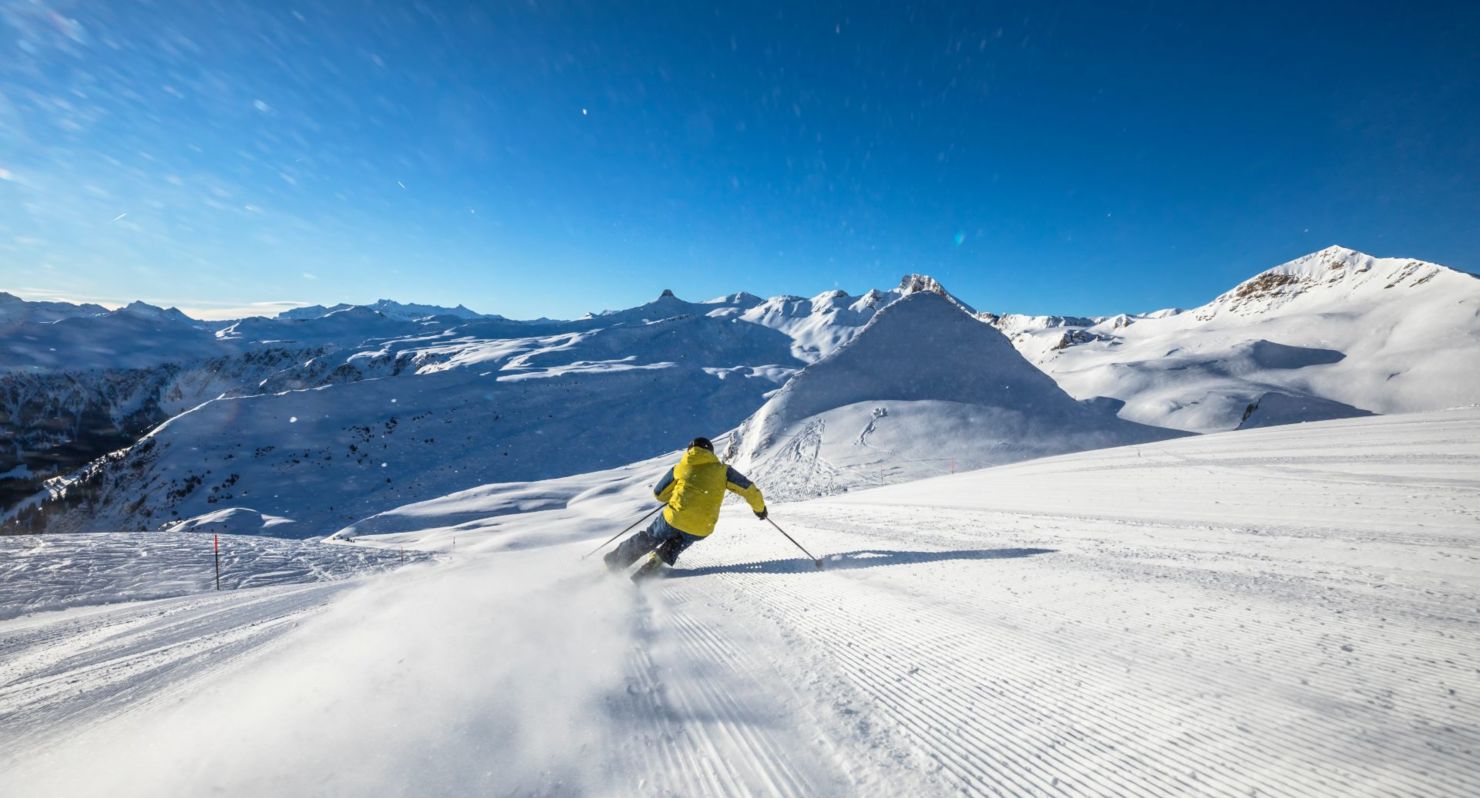
Let's be honest, when you drive from Sargans towards St. Gallen, the Rhine Valley doesn't seem particularly idyllic. But if you take the time to leave the highway, drive through the numerous villages and towns, and strike up a conversation with the locals, your opinion will change immediately. Along lush green fields and dense forests, you can always see impressive mountain landscapes. At first, there are the Churfirsten, Pizol, Alvier, and Gonzen, before the Alpstein and Säntis come into view or the Liechtenstein Alps with the Three Sisters on the other side of the Rhine. On cool autumn mornings, fiery wisps of fog float over the meadows, lit up by the sun. In winter, mighty peaks are enthroned in their winter garb. In spring, the Rhine Valley shines early in magnificent green, and summer drives people to the mountains, the small swimming lakes, and outdoor pools. If you can't find what you need at the village bakery, a shopping center awaits just a stone's throw away, tempting you with everything your heart desires. Tradition has a firm place in the small communities, and so festivals are celebrated, winter is driven out, and summer is heralded.
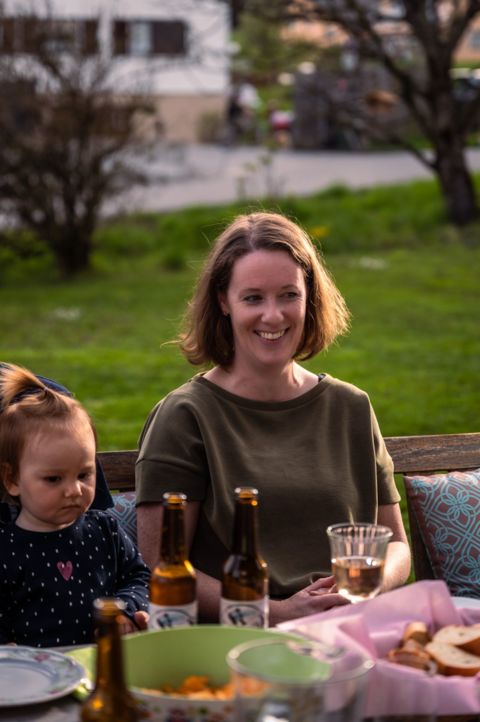

For Nadia and her family, who spend their weekends swimming, hiking, or skiing, the Sarganserland-Werdenberg region is a real treasure. This is perhaps why Nadia never quite left it behind. Nadia, the Rhine Valley, and the Dr. Risch laboratory have a long shared history. Growing up in Werdenberg, she began her training as a biomedical analyst (BMA) in 2001 and has been working ever since—with a few interruptions—in a laboratory belonging to the Dr. Risch Group. This is a remarkable career in an industry that is desperately seeking skilled workers. Nadia believes that the reason for the shortage of skilled workers is the low profile of the training and the profession. As a result, too few BMAs are being trained and the industry is desperately seeking personnel. For Nadia, her job is a labor of love. In general, the people who work at the Dr. Risch laboratory seem to have a very special fondness for their work. They are a close-knit community and laugh at laboratory jokes that leave others puzzled, with all attempts at explanation proving unsuccessful. They are also a team outside of working hours, and it is not uncommon to find one of Nadia's colleagues sitting on her terrace in Sennwald with a glass of wine.
Are you interested in a career in the laboratory? Here we have linked the vacancies at the Dr. Risch Group.
The Dr. Risch laboratory is one of many leading companies in the region. Few regions combine quality of life, career opportunities, and infrastructure as masterfully as Sarganserland-Werdenberg. In no time at all, you can reach major cities such as St. Gallen, hike along a trail with impressive mountain views, swim in Lake Walen, or make the first tracks in the freshly fallen deep snow. And all this in the vicinity of leading companies from all industries. Discover the region and its career opportunities now at sarganserland-werdenberg.ch